
- September 25, 2026
- By neon31
- In Guest Post
- No Comment
- 0
Hearthstone Battlegrounds Tier List: How to Read One
This article shows the author's opinion, which is not affiliated with our website.
- Ranking heroes in Battlegrounds focuses mainly on the average position a hero finished across seven other players instead of how often it finishes first.
- Early-game tempo, scaling, gold efficiency, and flexibility across different minions are the four main points that determine the performance of a hero.
- Stronger heroes usually have less armor while weaker ones have more. This helps balance the heroes overall.
- Things like seasonal changes, minion rotations, and hero balancing can make older rankings outdated. That’s why checking the rating range, sample size, and date of the patch before looking at a tier list is important.
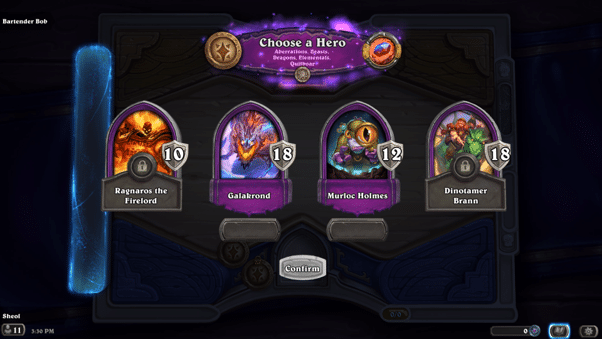
Starting a match, getting four heroes on the screen and only 30 seconds to pick one. You check a Hearthstone Battlegrounds tier list, but the rankings there are very different from a tier list you saw yesterday. This is a very common problem when it comes to hero tier lists. It happens because different sites rank the characters based on advantages and conditions while not providing a clear explanation of how and why they are ranked like this.
Usually, tier lists are based on the average finishing positions from a group of games at a specific skill rating and patch. Once you have the information about the average placement, rating range, and patch, it becomes much easier to understand why tier lists rank the same hero in different tiers.
Ranking of heroes also depends on the player’s rating level because different MMR ranges have different results. That’s why Battlegrounds support, including Skycoach, helps players at different MMR levels in different ways.
What a tier list actually measures
Battleground matches have eight players, so ranking applies to the average placement across many games. Since there are eight players, the middle point is 4.5. When a hero has an average finishing position lower than 4.5, that means they are more often in the better half than not.
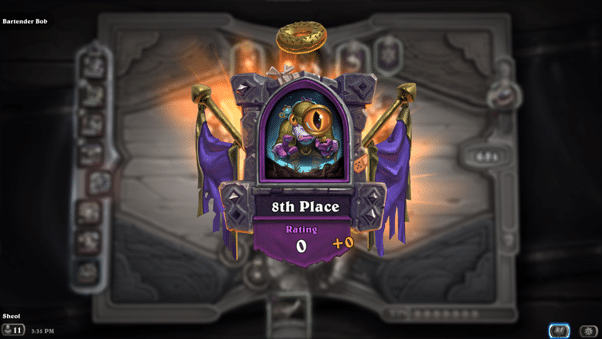
A good average placement usually shows consistency rather than how often a hero wins. Hearthstone Battlegrounds heroes that sometimes finish first but often finish eighth will have a worse average position than a hero that finishes fourth. That’s why even a hero that you personally won a lot of matches with can still appear around the middle of a tier list. A tier list usually shows how well a hero performs across many games, and not how likely it is to win one specific match.
The four traits that put a hero in the top tier
» Tempo
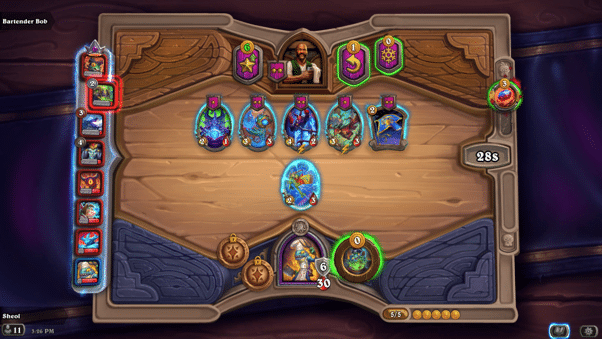
Tempo means spending resources early to make your board stronger during the first few turns. Hero Power can provide tempo by adding stats or an extra minion for less gold than you would spend in the Tavern. The simple test is: does using power make your board stronger immediately? This can be very helpful to protect your health for the later turns.
» Gold economy
A gold economy is when the gold you have can be used for more value. A Hero Power may reduce the cost of refreshes, Tavern upgrades, or even purchases. The best way to judge it is to see if the power saves gold regularly or if it gives a one-time benefit. Being able to save over many turns can be more beneficial than one big saving in some scenarios.
» Scaling
Scaling is when a Hero Power provides more value the longer the game goes. Some powers might seem very weak early but be very beneficial later on. The easiest way to test that is to ask yourself if the power will be more useful on later turns than on the initial ones. Scaling can be a reason for some heroes to not appeal as much because they start weaker but get very valuable later on.
» Flexibility
Flexibility is when Hero Power can work with different minion types and different lobby setups. To check the flexibility, see if the power depends on a specific mechanic, minion type, or condition. Usually, a power that is not flexible shows very inconsistent stats across different lobbies. Flexible powers, on the other hand, can be very powerful in many different scenarios and provide a lot more consistency.
Understanding these four traits will be an important part of your Hearthstone Battlegrounds strategy, but different rankings will value these traits differently. Usually, higher-rated games prefer scaling and gold economy, while the lower MMR games look more at tempo since the games end sooner.
Why armor runs backwards.
Heroes have armor points that act as extra health. The armor is given to the hero at the start rather than earned during the game. Currently, the heroes receive between 5 and 20 armor. What is unusual is that the stronger heroes have less armor while the ones that are weaker get more, as explained on the Hearthstone wiki’s armor page. This mechanic helps with the balance of heroes and keeps the weaker ones relevant and playable. There were armor tiers from 1 to 7, but that got changed after patch 25.6.
When comparing different tier lists of the best battlegrounds heroes, armor can work as an indicator. Blizzard adjusts the armor values when making balance changes for the heroes. When a hero with low armor appears near the bottom of a tier list, it usually means that the list is outdated. It’s important to check the armor of the heroes on the selection screen since it takes only a few seconds.
Why two tier lists disagree about the same hero
In a tier list, the Hearthstone Battlegrounds MMR range used to create the list can have an impact on where the heroes are ranked. Lower MMR lobbies tend to end earlier, which makes heroes that build a strong board quickly more valuable. Alternatively, higher-rated games give more value to scaling and gold economy since the games usually last longer. Because of this, the same hero can appear in different tiers depending on the MMR range the tier list is created for.
Rankings based on a few thousand games usually have inaccurate information since they are based on unusual results or short-term trends. A list based on millions of games, however, will have more consistent information since the sample comes from a lot of games and it doesn’t just show some overpowered strategies or short-term results. One of the problems is that most tier lists do not include the number of games they are based on.
Patch notes and date matter just as much. Hero balancing changes, armor adjustments, and minion type rotations can make older tier lists less relevant. The three things to check before trusting any tier list are: What rating were the games played at? How many games is the list based on? What patch was the list updated for? If the list does not provide information for any of these, it should be taken as an opinion rather than a ranking based on data.
Hero tier list shows average finishing positions across many games, while the top-legend deck lists show what high-ranked players used in victorious games. Both are relevant and important but show different data.
What wipes a tier list clean
Three vital changes can make a tier list completely irrelevant if made before them. Season changes are one of them since they can numerically and fundamentally change some heroes and minions. According to Blizzard’s season announcement, Season 14: Dark Gifts of Dalaran began on August 4 and introduced Dark Gifts, which cost 3 Gold, the Activate keyword, 23 new Lesser and 24 new Greater Trinkets, Lockboxes for Golden minions, and Fishbait, which lets Beasts attack during the Recruit Phase.
Minion rotations are also a major change since it makes different boards possible. On September 15, we got patch 36.6, and then on September 22 we got patch 36.6.1, which introduced Aberrations and temporarily removed Naga to make room for them, as confirmed in the 36.6 patch notes.
Hero balances are also an important change to look for when taking into consideration a tier list. Changes to armor and hero powers can be very significant. Changes and rotations are recorded in this site’s patch coverage, which can help to decide if a list is outdated.
A good Hearthstone Battlegrounds guide should make the patch date clear. Checking the date before using the tier list is very important. This rule applies especially after a new minion type arrives, since the rankings don’t have much data to work with.
The tier lists that are worth taking a look at are usually the ones that provide information about the data used for their creation rather than the biggest ones.
FAQ
» How good is 6000 in Battlegrounds?
6,000 MMR is a pretty solid, above-average rating. It puts the player in more competitive lobbies, but still not high enough where the heavy scaling heroes are more dominant. Players in this MMR bracket should focus on consistent top four rather than thinking only about first place.
» Do people still play Hearthstone Battlegrounds?
Yes, and it has its seasonal format. Season 14 began on August 4, and a new minion type was introduced in the September 22 patch.
» What's the point of Hearthstone Battlegrounds?
It’s an eight-player free-for-all auto-battle inside Hearthstone. All players draft minions from the tavern and place them on the board to fight automatically. The goal is to get finish as high as possible and the top 4 are considered as winning spots.
» Why do tier lists rank the same hero differently?
Tier lists can show different information since they can rank based on different MMR, different numbers of games, and different patches.
» Does a high-armor hero mean a weak hero?
Usually yes; the weaker the hero, the more armor it has, and vice versa.
» How often does a Battlegrounds tier list change?
It can change after a hero balance change, minion type rotation, or seasonal change.
Submit your Top 500 Legend Build, be seen by thousands of people!